
Research or Regress
What if sexual assault survivors had access to healing care?
For survivors of sexual assault, care is critical. Penn State's SAFE-T System is providing access to specialty care when it matters most.
Chris* was nervous when he arrived at the hospital. Having recently experienced sexual assault, he knew that he needed to be examined—which can be an uncomfortable and intimidating experience when you don't know what to expect. But what he didn’t know was that the hospital he walked into provided a new standard of care for sexual assault survivors, led by researchers at the Penn State Ross and Carol Nese College of Nursing.
His specially trained care team focused on providing trauma-informed care, creating a safe and supportive environment for Chris as they conducted a medical and forensic exam, giving him control and helping him take the first step toward healing.
“They were kind and patient. They listened to me and made me feel comfortable,” he said. “It was life changing.”

“[SAFE-T System] helps me become a better nurse each time I do an exam.”
Erin Dobbs
Registered Nurse, SANE
The Challenge: Access to Expert, Trauma-Informed Care
In the United States, one in two women and one in six men experience some form of sexual violence in their lifetime; however, few seek health services because of fear and stigma. Sexual assault survivors experience high rates of post-traumatic stress disorder, anxiety, thoughts of self-harm, chronic disease, and lost productivity.
When survivors do seek help, they experience better physical and mental health outcomes when they’re treated by a sexual assault nurse examiner (SANE). SANEs are specially trained in performing specialized exams that prioritize the survivor’s healing while carefully gathering evidence, just in case they decide to take legal action later.
Yet, in Pennsylvania, only one out of four hospitals have SANE nurses, leaving large portions of the state without access to essential, trauma-informed care.
“Sexual assault survivors still come to the ER whether the hospitals have SANEs on staff or not. How many opportunities do we miss for patients to get the specialized care that they truly need?” said Erin Dobbs, registered nurse and SANE at Penn State Health Holy Spirit Medical Center in Camp Hill, Pennsylvania.
A New Standard of Care for Sexual Assault Survivors
Long before video calls and telehealth were the norm, Sheridan Miyamoto, associate professor of nursing at Penn State, believed that technology could potentially revolutionize access to specialty nursing care for sexual assault.
“Everyone harmed by sexual violence deserves access to compassionate care that will help them to heal, but hospitals aren’t required to have a sexual assault nurse examiner available every time somebody experiences harm,” Miyamoto said.
Hospitals often have trouble attracting and retaining SANE nurses because training is extensive, and burnout is common. Only 7% of SANEs still practice two years after becoming certified.
In 2017, Miyamoto developed a model called SAFE-T System to address this gap in care, especially in rural and underserved communities. Instead of lengthy, off-site training programs, SAFE-T System’s combination of virtual, hands-on training and real-time telehealth support helps hospitals build their capacity to provide specialized care faster.
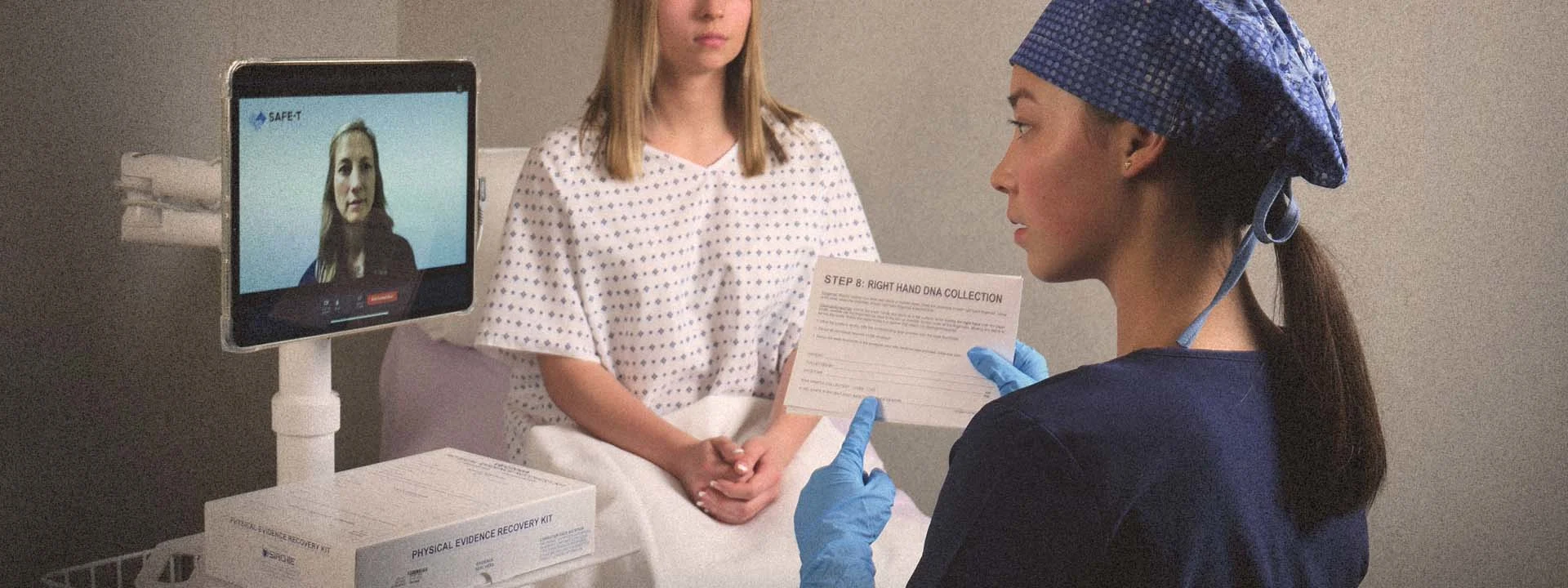
With the patient’s consent, SAFE-T pairs an on-site nurse with an expert, board-certified SANE during the medical exam to support both the patient and on-site nurses.
Watch: How the SAFE-T System Works
Using secure telehealth technology, the remote SANE nurse can see and hear the live exam. This allows the remote SANE to talk to the patient, making sure that they understand their rights and options. They also model trauma-informed care and best practices while guiding the on-site nurse as they conduct the exam and collect evidence. It’s an extra layer of support for nurses as they gain experience.
“Knowing the SAFE-T System has my back is truly a benefit. I feel fully supported," Dobbs said. When her hospital’s SANE nurses left, the SAFE-T System helped Dobbs and her team provide this vital care again.
“It helps me become a better nurse each time I do an exam,” she said.
SAFE-T Systems Improve Patient Care
Hospitals that partner with SAFE-T System see better quality care, according to extensive research conducted by the SAFE-T Center.
94%
Of patients report improved care and that they feel better after examination.
Improved Efficiency
SAFE-T hospitals experienced gains in emergency department workflows.
75%
Of nurses trained and supported by SAFE-T System remain in the job one year later.
Penn State is Providing Equitable Access to Compassionate Care
Patients can choose to share their experience with researchers at the Penn State Ross and Carol Nese College of Nursing to improve future training programs and serve as a blueprint for better care. Many patients find that participating in this research is empowering.
“It’s a concrete step they can take that makes them feel like they can make a difference. They can take this bad experience and turn it around to help someone else,” Dobbs said.
The SAFE-T System is a vital resource in Pennsylvania, working in partnership with six health systems including Penn State Health, University of Pittsburgh Medical Center, Penn Highland, Pennsylvania Mountains Care Network, Titusville Area Hospital, and Main Line Health. It also partners with health systems in Idaho and is expanding nationwide.
*Name changed to protect the patient’s identity.
This is Penn State Research
What happens if it stops?
Learn more about the implications of federal funding cuts to your future.