
One Million Degrees. One Powerful Penn State Community.
One million degrees tells a remarkable story of opportunity, discovery, and connection. Together Penn Staters continue to shape communities, industries, and the future.
The Road to One Million
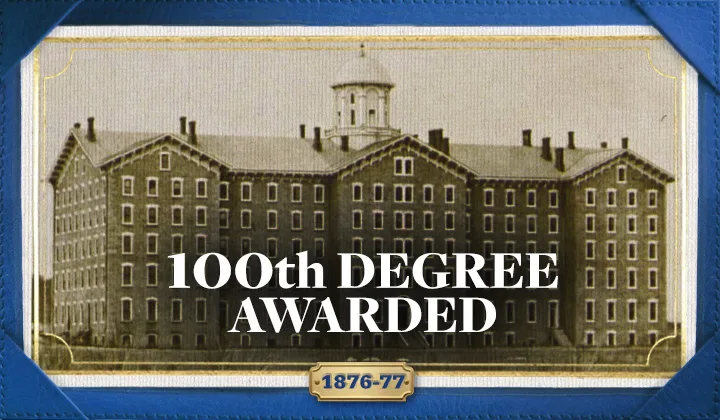

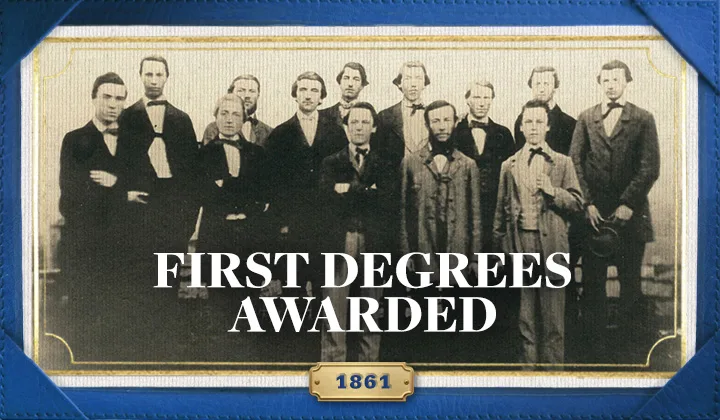
Originally named the Farmers’ High School of Pennsylvania, Penn State awarded its first degrees in December 1861. Its founders’ aim was to encourage the application of science to farming and to create well-rounded citizens. Eleven of the students pictured here earned bachelor of scientific agriculture degrees, becoming the first students to complete a baccalaureate program at an American agricultural college. The other two students withdrew shortly before graduation to join General William Tecumseh Sherman’s bodyguard during the Civil War.
In the 1876-1877 academic year, Penn State, then known as the Pennsylvania State College, awarded its 100th degree. The original “Old Main” was the only building on campus and included classrooms, offices, and living quarters. Students were expected to attend a mandatory chapel service each day at 6 a.m., followed by classes, military drills, and several hours of work on the grounds or in the labs. Just a few years earlier in 1873, the school graduated its first female student, Rebecca Hannah Ewing.
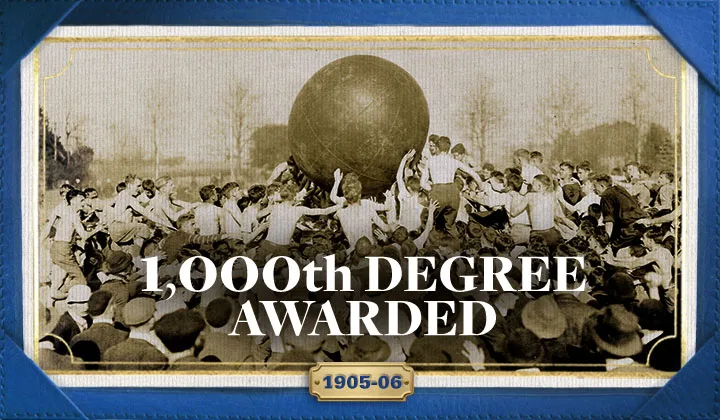
Shortly after celebrating its semicentennial, the institution awarded its 1000th degree in 1906. Enrollment had grown to 800 students, nearly all of whom were men. Student life centered on “scraps,” competitions between first years and sophomores, and formal dances in the Armory. That year, upperclassmen voted that first years should wear small beanie hats, known as “dinks,” and the Nittany Lion was officially championed as the school’s symbol. In 1905, Calvin H. Waller became the first Black student known to have graduated from the University.
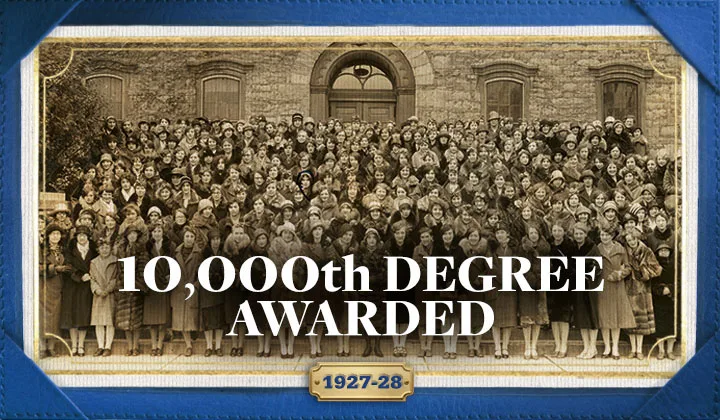
When Penn State awarded its 10,000th degree in 1927-28, “customs” for first years were at their peak. Customs prohibited male first years from occupying the wall along College Avenue, using the front entrances to classroom buildings, smoking, walking on the grass, or dating coeds—at the time women comprised about 10% of the student body—except on special occasions. The College was a national powerhouse in boxing and wrestling. The first doctor of philosophy degree was awarded just two years earlier in 1926.
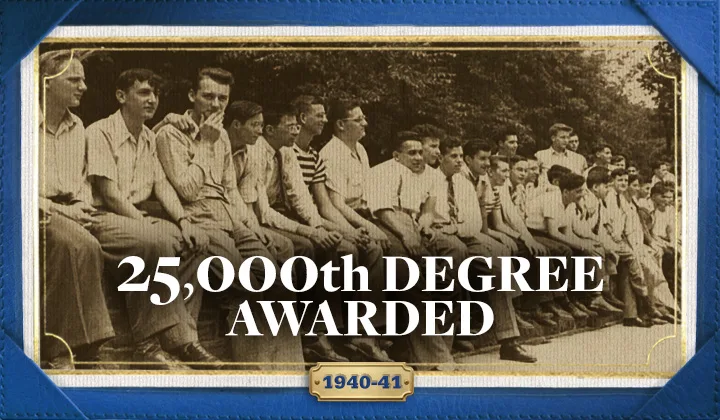
Penn State awarded its 25,000th degree in June 1941, just months before the United States entered World War II. Student life still felt relatively normal, even as the college made significant contributions to the war effort through federal Engineering Science and Management Defense Training programs. Over 1,200 students enrolled in Army ROTC in 1941; the largest contingent of any institution in the Northeast. In the next few years, 44 members of the class of 1941 were among the 384 Penn Staters who lost their lives in the war. The class of 1940 seniors voted for a sculpture as their class gift: the Nittany Lion Shrine, which was dedicated in 1942.
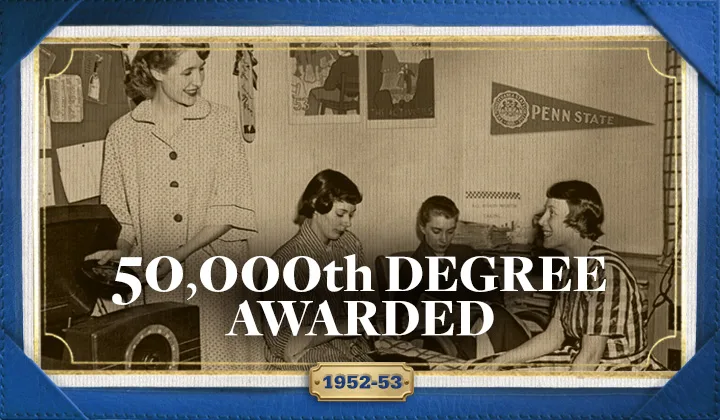
Penn State awarded its 50,000th degree on June 4, 1953, the same year it officially became “The Pennsylvania State University.” Milton Eisenhower was the University’s president at the time, and his brother, Dwight D. Eisenhower, was elected president of the United States in 1953. The iconic Lion Pillars, which currently stand at the intersection of Burrowes Street and Pollock Road, were presented by the class of 1903 in honor of their 50th anniversary. Construction began on a new student facility, the Hetzel Union Building, soon nicknamed “The HUB.” The wrestling team won its second national championship, with the first being in 1921.
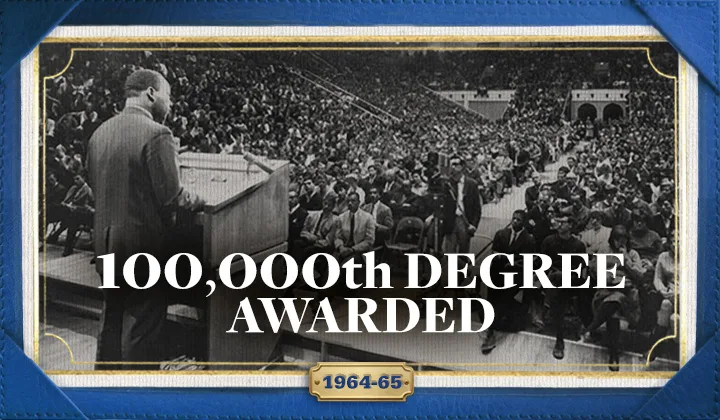
In 1965, the 100,000th degree was awarded at the beginning of what is now considered the student activist era. Civil rights leader Martin Luther King Jr. addressed more than 8,000 people at Rec. Hall on Jan. 21, a visit organized by the NAACP student chapter. As documented during the opening of a time capsule in 2016, there was an unwritten rule for attire during football games in 1965: Men who had a date for the game dressed in three-piece suits, while those going solo wore sports jackets and turtlenecks.
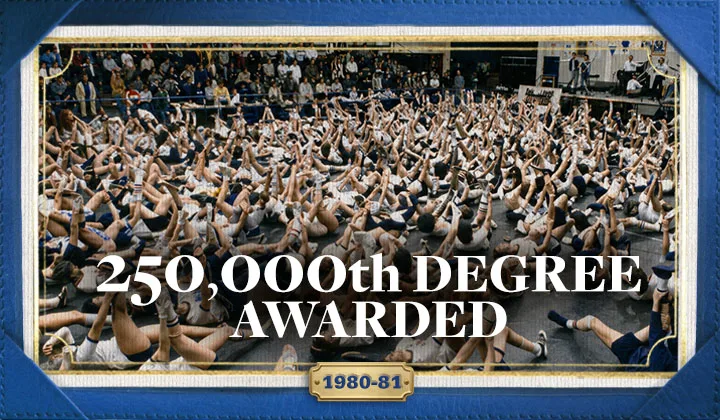
The year after its 125th anniversary, Penn State awarded its 250,000th degree in 1981. Greek life was prominent, and the eighth annual Dance Marathon raised a record $86,682 for the Four Diamonds Fund, with 111 couples dancing for 48 hours. Students registered for classes and housing in person, and relied on landline telephones and snail mail, printed schedules, and library card catalogs to communicate, navigate classes, and find reference materials for coursework. Penn State women’s teams won national titles in field hockey and fencing.
Penn State awarded its 500,000th degree in 2001, at the start of the new millennium. Students now had regular access to the internet and utilized computer labs, email, and instant messaging; however, smartphones and social media as we know them today were still in their early stages of development. The University was only in its second year of awarding degrees to students who pursued their education online via Penn State World Campus, which now–more than 25 years later–has more than 40,000 alumni.
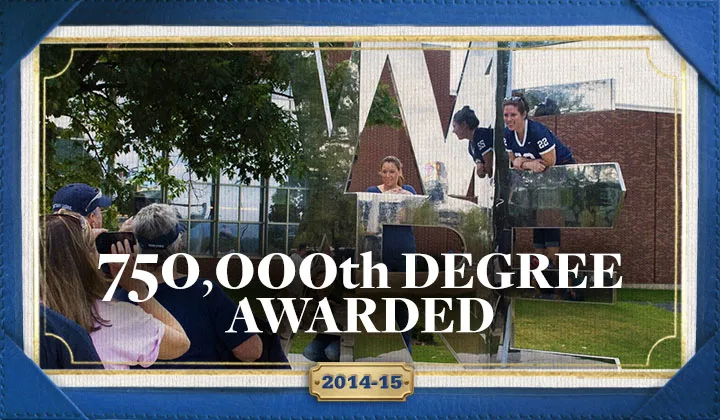
Penn State awarded its 750,000th degree in 2015, the same year that the “We Are” Sculpture, a gift of the class of 2013, was installed at University Park to “embody the unity that ‘We Are’ inspires among Penn Staters and reflect on what the phrase means to them.” Other major milestones celebrated that year included the launch of Invent Penn State, the University’s first women’s soccer NCAA title, and the 150th anniversary of the Berkey Creamery. Many of the traditions, landmarks, and experiences that define Penn State today were already part of campus life.
Support the Next Million
Your generosity helps expand opportunities for students and strengthens the University's impact for years to come.
Meet a Few of the Million
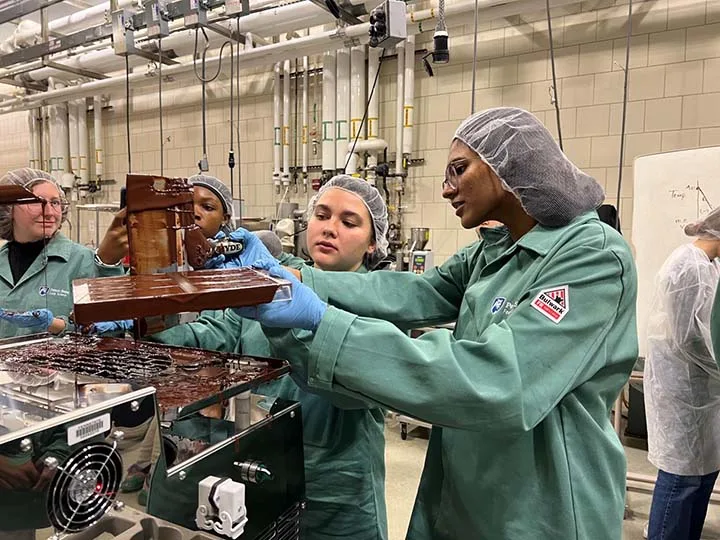
The Far-reaching Impact of Penn State Degrees
From supporting space missions to advancing pediatric cancer research to preserving insights of military leaders, Penn State alumni are making an impact in a variety of ways.

Paying it Forward: Penn Staters Support Student Success
Members of the Penn State community have volunteered time, made financial contributions, or launched new programs to advance career opportunities for the future.
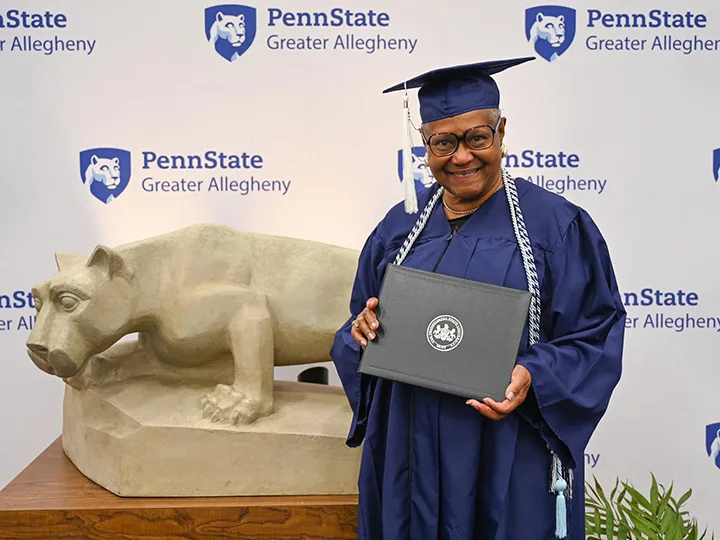
The Path to a Penn State Degree
For many Penn Staters, attending the University was not part of their plans. Read stories of how a Penn State degree became an unexpected part of some graduates’ trajectories.
Penn State set an exceptionally high standard for my education journey…[it] stood out for its unmatched faculty, staff support, and academic quality."
Kaela Fuentes-Packnick
Special Education ’11, Language and Literacy Education ’11, Language, Culture, and Society ’22
Watch: Advice From Grads
Share Your Story
One million degrees are made up of one million unique experiences. We'd love to hear yours.