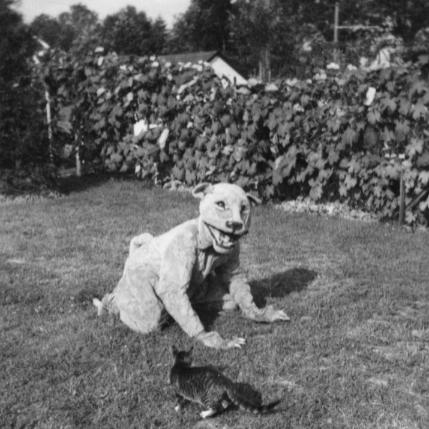
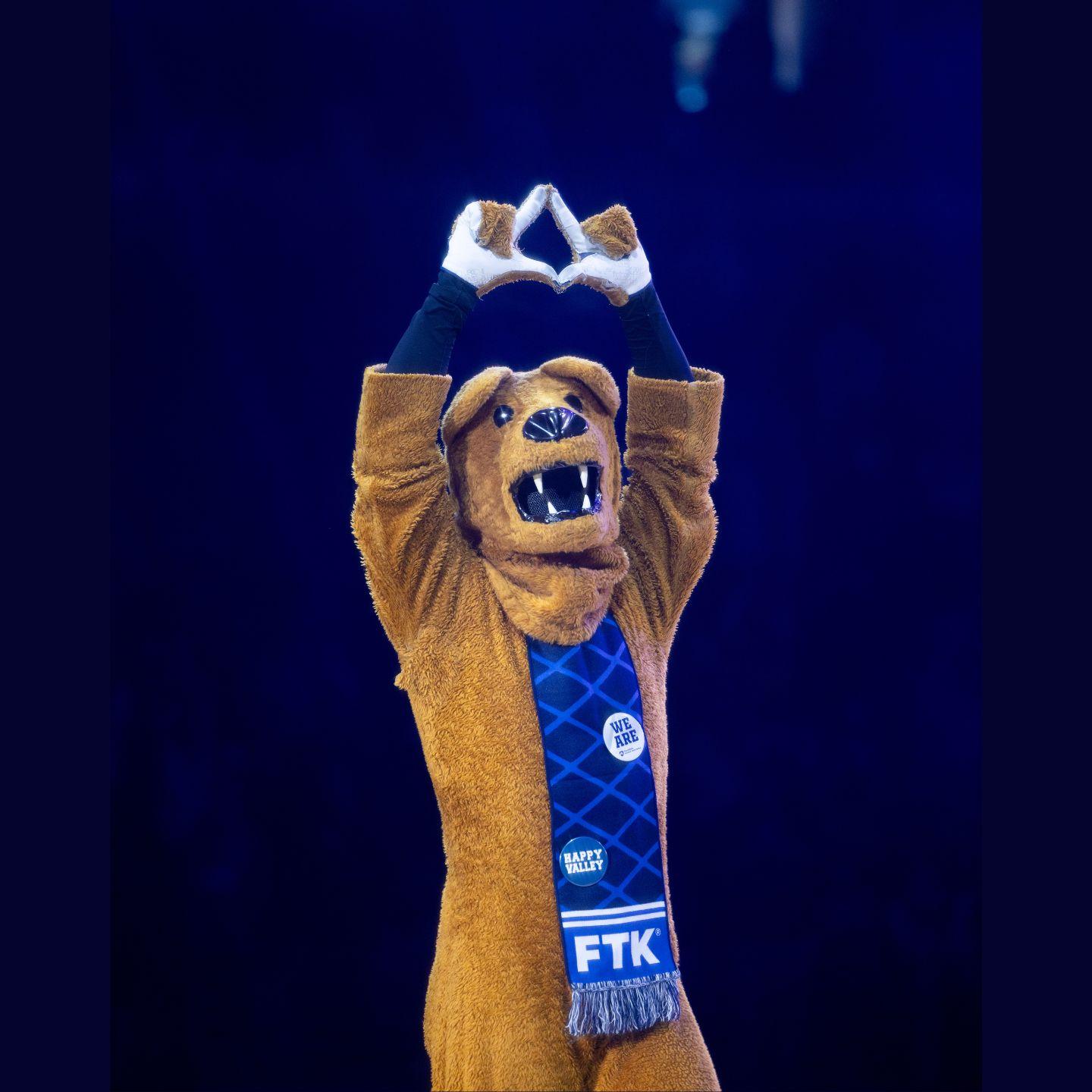
Since the Nittany Lion was first conceptualized in 1904, just 54 individuals have had the privilege of serving as Penn State’s official mascot. Unlike most Division I schools that divide mascot responsibilities among multiple students, Penn State’s official mascot is portrayed by one student at a time. Here, the outgoing mascot and several of his predecessors give a behind-the-scenes glimpse of their shared experience of upholding the Nittany Lion as a continuous spirit that brings joy, comfort and connection to thousands of Penn Staters, community members and fans around the world.

Hail to the Lion: Penn State mascot’s spirit, legacy kept alive by a select few
Unlike most Division I mascots, the Nittany Lion is portrayed by a single student at a time. Mason Reber was recently revealed as just the 54th individual to have had the honor of officially serving as the University’s mascot
Credit: Michael Owen / Penn State. Creative Commons
Imagine measuring exactly 6 feet of school spirit (7 feet if you count the ears). Commanding more than 107,000 fans without saying a word. Doing one-arm pushups like a pro. Taking more selfies than most influencers. And having more than 800,000 best friends around the world, while simultaneously making every person you encounter feel special.
That is the unofficial job description for the student that portrays Penn State’s Nittany Lion mascot, which has been cheering on teams and charming crowds for more than 120 years. And while the mascot’s look and presence have greatly evolved over time, its character and legacy are longstanding.
“The Nittany Lion is the encompassing spirit throughout people’s Penn State experiences,” said Curtis White, spirit coordinator and head coach of Penn State’s cheer program since 1997. “The Lion means different things to different people, but represents for everyone what it means to love Penn State.”
The Nittany Lion mascot is brought to life through a select few. Unlike most Division I schools that divide mascot responsibilities among multiple students, Penn State’s official mascot is portrayed by one student at a time. On Nov. 22, Mason Reber was revealed as just the 54th student to have had the honor of officially serving as the Nittany Lion — which he has done since 2023.
“Having one person embody the character keeps it consistent, timeless and deeply personal,” said Nicholas Indeglio, who served as the Nittany Lion mascot from 1996 to 1998. “I have never viewed the Lion as a new student taking over every few years; rather, I see it as one continuous, living spirit that passes through us all. We simply get the privilege of carrying it for a short time before handing it to the next generation.”
Over the years, White has considered adding more student mascots so the Nittany Lion could be present at more events. But, he said, the impact a single person can make preserves the Nittany Lion’s character and allure with consistency — and is a unique distinction for Penn State.
“There is a great sense of pride in reserving the honor for a single student,” White said. “There is no way one person can be at every single campus and community event. So when the Nittany Lion unexpectedly shows up at a particular event, it makes it even more special. People in attendance truly feel like VIPs.”
“The key to the Lion’s appeal is there is only one person who occupies the suit,” added Dave Johnson, who served as the mascot from 2005 to 2007. “It means no matter the event, you’re going to consistently get the same enthusiasm and quirks people love about the Lion. Whether it’s at Beaver Stadium in front of 107,000 people or at a much smaller community event, the same person will be bringing the Lion to life.”
A mascot's double life
Not only does a single student portray the Nittany Lion at a time, they do so anonymously. But it hasn't always been that way. For decades, the name of the student wearing the suit was publicly announced and published throughout their tenure. According to White, intentional efforts have been made in recent years to keep the student’s identity a secret until the final home football game of their senior year, in line with other mascot programs across the country.
“Keeping the name of the student under wraps makes it more magical and enhances the Lion’s mystique,” White said. “It keeps the character alive over time.”
Robert Nellis, who served as the Nittany Lion mascot from 2011 to 2013, agreed.
"There’s magic in being that bridge between people and the Penn State spirit," Nellis said. "You’re anonymous, but you’re part of something unforgettable.”
Keeping their identity hidden also allows the students in the suit to step outside their comfort zone when they are in character.
“Mason is relatively reserved for the most part but when he’s in the suit, it’s like a lion comes out,” White said. “Earlier this season he performed with the Lionettes and I remember thinking, ‘I can’t believe Mason can dance like that.’ I don’t see him as a dancer when he’s out of the suit, and then he suddenly transforms. It makes it fun for those of us who do know the student’s identity.”
“It feels like being Batman,” Reber added. “You’re Bruce Wayne, and then you go into a closet with a duffel bag and come out as a completely different person. It creates fun stories.”
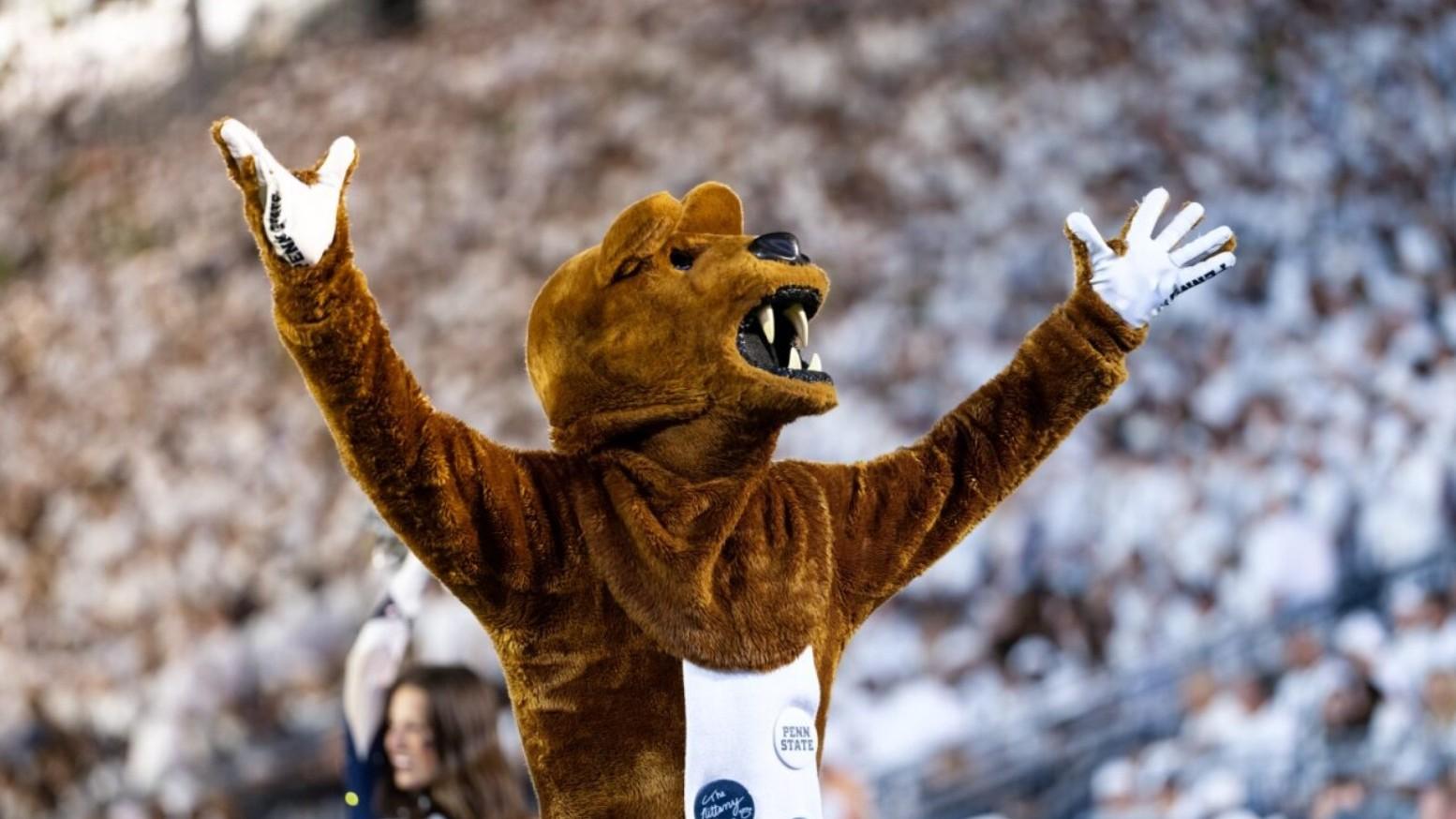
Portraying the Nittany Lion also comes with great responsibility. The mascot makes approximately 300 appearances each year — at sporting events, ribbon cuttings, fundraisers, and University and community events — bringing joy, comfort and connection to thousands.
This is all on top of being a full-time student. Reber, who will earn a degree in civil engineering in December, has also been involved with ROTC throughout his Penn State career. Several times each day, he transforms from a student to the Nittany Lion, and back again.
“Lions work harder than any other mascot, anywhere. None are specifically asked to make so many appearances and create balance with class and social lives,” said Rob Sterling, who served as the Nittany Lion from 1984 to 1986. “Looking back, I suspect most of us laugh, wondering how we survived!”
The schedule is demanding, but Reber, along with others who have been the mascot, say they wouldn’t trade it for anything in the world.
“I’m doing a thing not many people will ever get to do, and that alone is what keeps me going,” Reber said. “Being the Nittany Lion has opened up the Penn State world for me, and I’ve been introduced to many more opportunities than I would have ever realized.”
“The Symbol of Our Best”
In addition to managing a busy schedule, the student who portrays the Nittany Lion is also responsible for positively representing the University in every appearance and interaction they make. The Nittany Lion regularly appears in front of students, faculty, staff, alumni and community members; interacts with University leaders, major donors and company CEOs; joyfully entertains 107,000 enthusiastic football fans and solemnly brings comfort to individual children and their families in times of need.
“We call the Nittany Lion ‘the symbol of our best,’ and I believe that to be true,” said Michael Valania, who served as the Nittany Lion mascot from 2013 to 2015. “It’s the personification of an idea that supersedes current events, past failures or the hopes of future success. It embodies all that is good about our students, causes, academics, research, athletics and the community that supports them all.”
Even when the student who portrays the mascot is having a bad day, the second they put on the suit they are instantly transformed into the character that is expected to bring joy to everyone he meets.
“It wasn’t about Pete Garland as the Lion, it was about ‘the Lion,’” said Pete Garland, who served as the Nittany Lion mascot from 1988 to 1990. “And the Lion always made people smile or laugh.”
The evolution of the Nittany Lion's legacy
Several notable trademark attributes have become an inherent part of the Nittany Lion over time — from doing one-arm pushups for every point scored on the football field, to spinning the tail and rubbing the ears, to leading a cheer with a cowbell. Every student who wears the suit carries these traditions while putting their own signature mark on the character.
“The Nittany Lion is bigger than any one person, but every person who has worn the suit has made a mark,” said Johnson.
“While the Lion’s athleticism, choreography and personality have continued to grow, the core remains unchanged. The heart, the pride and the service are the same,” added Indeglio. “That is the magic of the Lion; it evolves without losing its soul.”
Adding their mark
The photo gallery below gives a glimpse of how and when some Nittany Lion traditions started, and other ways the mascot has evolved over time:
For Reber, he said he hopes that leveraging the Nittany Lion’s relationships with fans — especially children — will become part of his legacy.
“I’ve really emphasized making interactions with kids special after an instructor at mascot camp said that children start to think about their future college between five and seven years old.” Reber said. “That hit me hard. Every time I meet with a child, I could be shaping their path to one day possibly want to go to Penn State. So I always try to give every kid the most out of their experience with the Nittany Lion.”
Reber and the 53 individuals before him have each contributed to building the Nittany Lion’s legacy. Because of their collective effort over time, the mascot’s spirit is kept alive for the future while honoring a shared sense of tradition and a connection to the past.
“Today, as then, the Nittany Lion mascot is a powerful symbol of all that is good at Penn State,” said Dan Kohlhepp, who served as the mascot from 1967 to 1968. “Putting on the Lion suit is about personal humility and responsibility every bit as much as it is about capturing the power and unleashing the exuberance of a common good, a common goal and a common happiness.”
Editor's note: Stay tuned to Penn State News for more stories and photos from former Penn State students who have served as the University's official Nittany Lion mascot.