By Gail McCormick and Sam Sholtis

Eberly College of Science
Adopting, advancing and adapting to AI
How the Eberly College of Science community is refining and integrating machine learning and other artificial intelligence tools to elevate teaching and propel research
Credit: Dani Zemba / Penn State. Creative Commons
UNIVERSITY PARK, Pa. — Artificial intelligence (AI) has become a nearly ubiquitous aspect of modern life. People interact with AI on a daily basis through autocorrect and predictive text, phone-unlocking facial recognition, the algorithms driving social media feeds and traffic predictions in navigation apps. It’s already hard to imagine life without these modern conveniences. More broadly, AI is changing the job market in unpredictable ways, which presents opportunities and challenges for institutions of higher education.
Science fiction writers and Hollywood have provided the blueprint for the future of humanity and its workforce. On one end of the spectrum, it imagines a utopian lifestyle where AI does all the work and humans have space for creativity and leisure as in the Disney/Pixar movie “Wall-E.” On the other, perhaps a self-aware AI that dominates the world at severe cost to humans as in James Cameron’s “Terminator” movies. The reality may be neither of these extremes, and universities like Penn State are finding ways to prepare students for as-yet unknowable future careers, and Penn State faculty are transforming how they approach research.
In the Eberly College of Science, researchers are leveraging AI to manage massive datasets, identify patterns in complex images, evaluate tools to improve human health, test the properties of newly developed materials and a myriad of other applications. Instructors are finding innovative ways to incorporate AI into their classrooms to support student learning and to equip them with the skills and knowledge needed to thrive in an AI-driven workforce. But what is artificial intelligence, and are people really talking about the same thing when they say AI?
What is AI?
Artificial intelligence loosely refers to machines with human-like “intelligence.” This can include qualities like learning and problem-solving, but what constitutes intelligence — and the markers of that intelligence — is still up for debate.
The field of AI research officially originated at a workshop of researchers at Dartmouth College held in 1956, though ideas of artificial humans can be found throughout history and myths, arguably dating as far back as the ancient Greeks. The meaning has changed over time, sometimes referring to specific algorithms or popular generative AI models and sometimes to an anxiously anticipated future self-aware machine that will bring with it a horde of ethical, security and other challenges.
Today, AI is largely an umbrella term for the multitude of increasingly prevalent and rapidly evolving technologies that are shaping science, teaching and just about everything else in daily life. These technologies, from machine learning to neural networks, all rely on modeling uncertainty and use theory and methods from mathematics and statistics. Although the terminology and technology are changing by the day, it’s clear that AI, in some form or another, is here to stay.
AI and society
The rapidly advancing field of AI has brought with it a lot of excitement, but also apprehension. Much like the advancement of the internet, which had rapid early development and has changed dramatically over the years, AI offers potentially huge benefits, but needs to be navigated thoughtfully. AI could help manage the deluge of data that other advancing technology allows researchers to collect and store at an unprecedented rate in fields ranging from health to astronomy. It could help innovate solutions and mitigate ongoing crises, for example climate change through improved climate models and optimized energy grids, and has already made huge strides in accessibility, for example by generating alternative text and subtitles on images and videos.
However, more research is required to understand and inform concerns ranging from the ethics of sourcing training data to the impact on our own brains. AI is here to stay, and there is work to be done to make AI more efficient and sustainable, to clearly identify when it is — or isn’t — appropriate to use, how that can be done ethically, and to prepare students for an AI-driven workforce.
“Artificial intelligence on the whole has already been incredibly transformative, and we continue to explore how to harness this technology to enhance our research, teaching and operations in the Eberly College of Science,” said Tracy Langkilde, dean of the Eberly College of Science. “Our researchers have been using machine learning and other forms of artificial intelligence for decades to make advances in everything from understanding our bodies and environment to materials and even the cosmos. Now, it is allowing us to do things we never thought possible.”
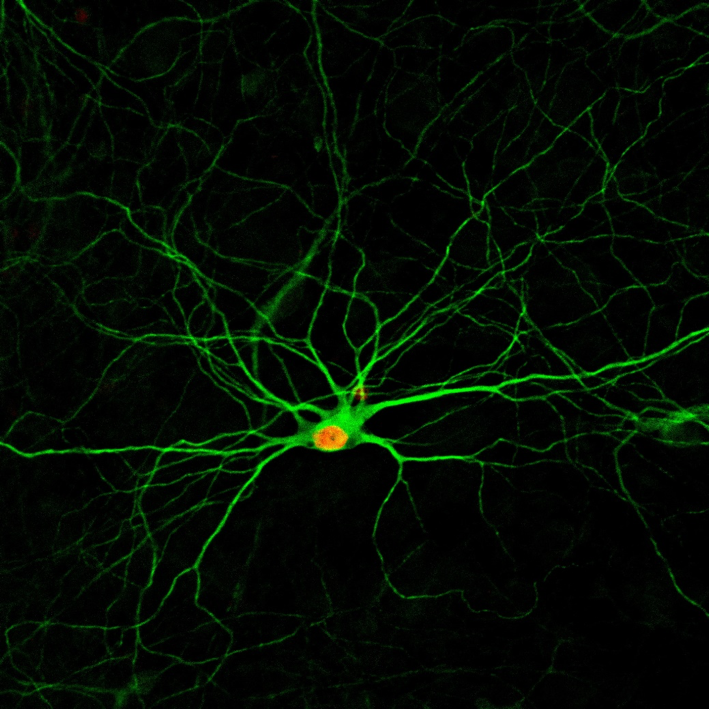
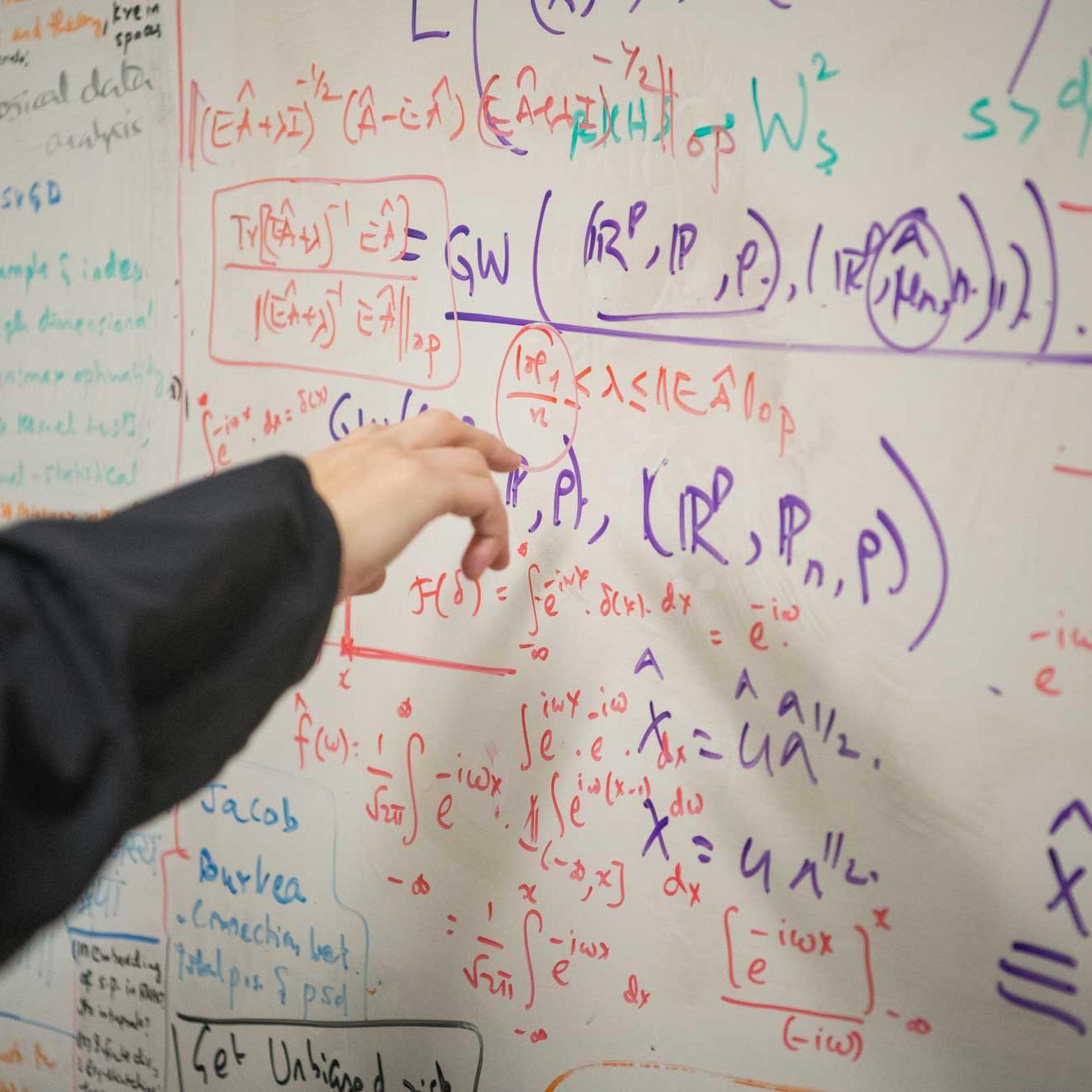
AI and machine learning — which falls under the AI umbrella — have supported research across all departments in the college. Additionally, some Penn State researchers are working to develop, improve and better understand artificial intelligence methods, theory and algorithms. Many Eberly College of Science researchers are involved in and have leadership positions within the Penn State Institute for Computational and Data Sciences’ AI Hub, which connects interested researchers from across the Penn State system, as well as its many centers, including the Center for Socially Responsible Artificial Intelligence.
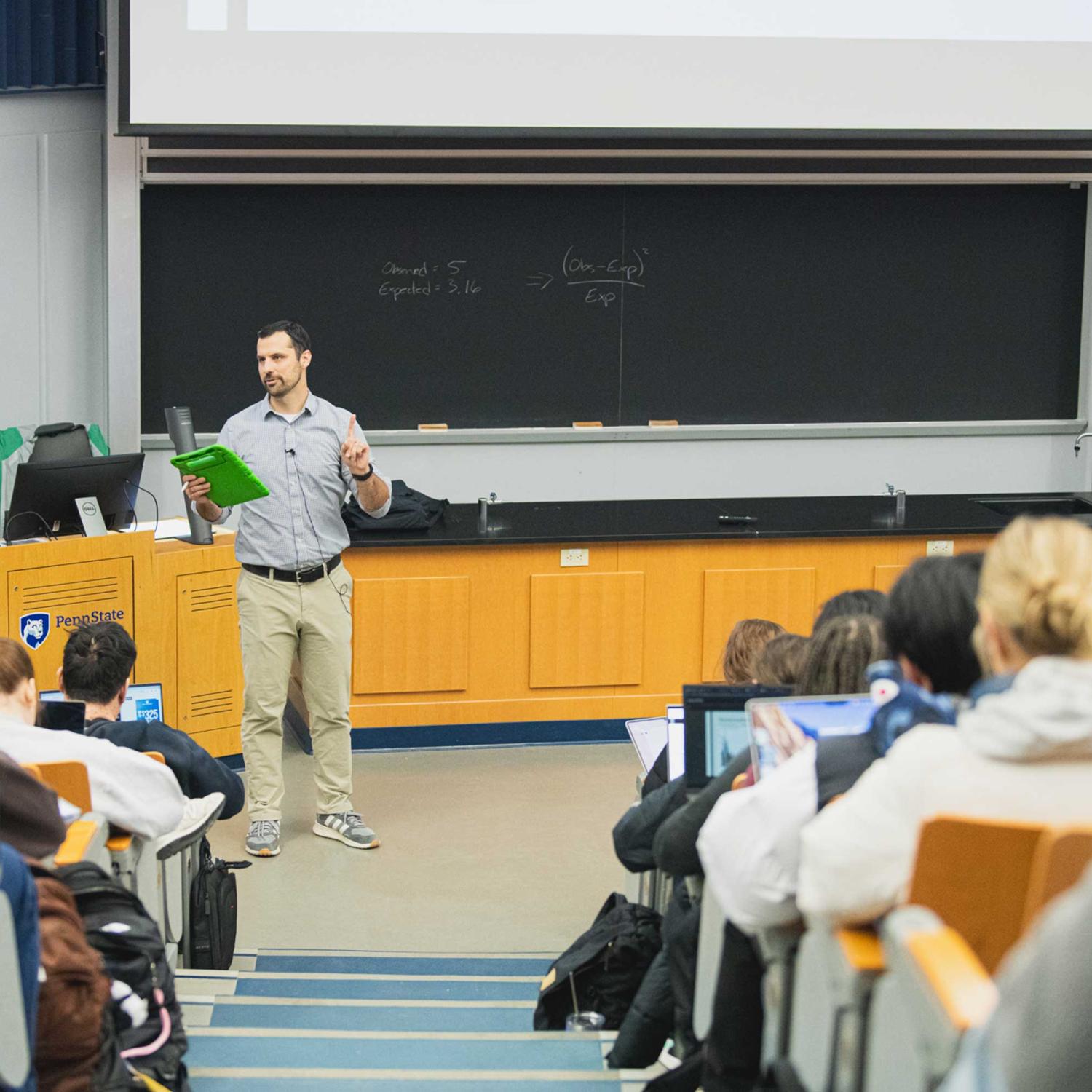
Instructors in the college are also thoughtfully experimenting with how AI can successfully be used as a critical tool to transform teaching and learning while maintaining the integrity of the educational experience. In addition to launching new AI options for undergraduates majoring in mathematics or statistics, the college is working to improve AI literacy among its community and especially among its students, with the goal of teaching students how to use AI responsibly, creatively and effectively.
“In the age of AI, Penn State has the opportunity to define what it means to be a world-class land-grant institution, including advancing human-centered innovation, ethical leadership and lifelong learning,” said Fotis Sotiropoulos, executive vice president and provost at Penn State. “The strategic focus areas we’ve identified aim to build career-critical AI skills and AI literacy at every level, ensure that every student thrives in the age of AI, position Penn State as a national leader in AI-driven research and innovation, and build a modern digital ecosystem.”
Learn more
Click the links below to read about the wide variety of ways members of the college are developing and using AI in innovative ways to support their research and teaching.

Editor’s Note: This story first appeared in the winter 2026 issue of the Science Journal, the Eberly College of Science magazine.
Contact
Gail McCormick